
Restoration Masters
Structural drying measured against numbers, not assumptions
A home can look dry long before it actually is — our structural drying and dehumidification process for Markham and the GTA relies on genuine moisture readings, not appearances.
Email Us for a Free Estimate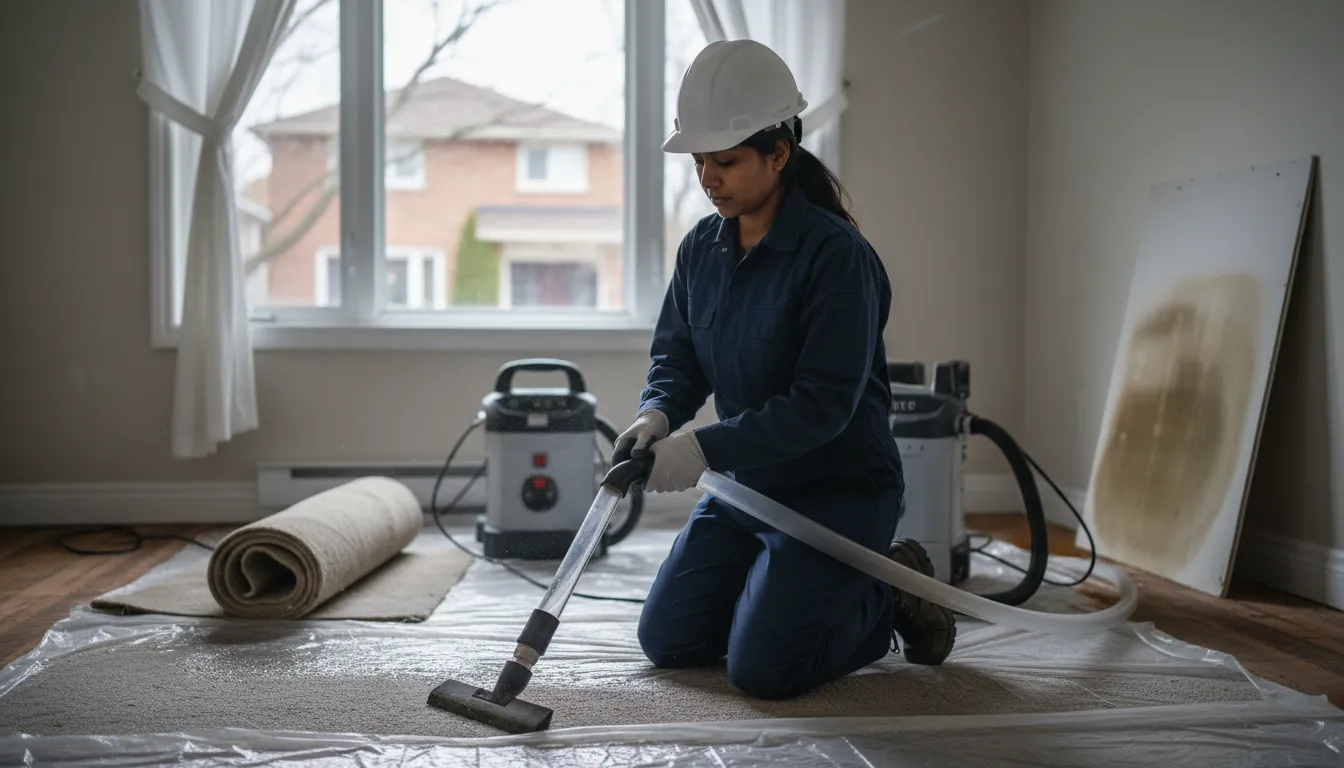
The part of restoration that's easiest to rush
Drying is unglamorous compared to demolition or rebuild, which is exactly why it's the stage most often shortened. Equipment gets pulled a day early, a surface feels dry to the touch, and everyone moves on — except moisture trapped behind a wall or under a subfloor doesn't announce itself until months later, as a musty smell, a soft spot, or worse.
Moisture mapping from the outset
We take baseline readings across all affected materials before setting equipment, so we know exactly what we're working against.
Equipment matched to the space
Dehumidifiers and air movers are sized and placed according to the room's volume and material types, not applied uniformly.
Daily monitoring, not a single check
We track drying progress over the course of the process, adjusting equipment placement as readings change.
A defined endpoint, not a guess
Drying concludes when moisture readings confirm safe levels — a specific, measurable finish line, not a feeling.
GTA humidity and housing stock complicate drying
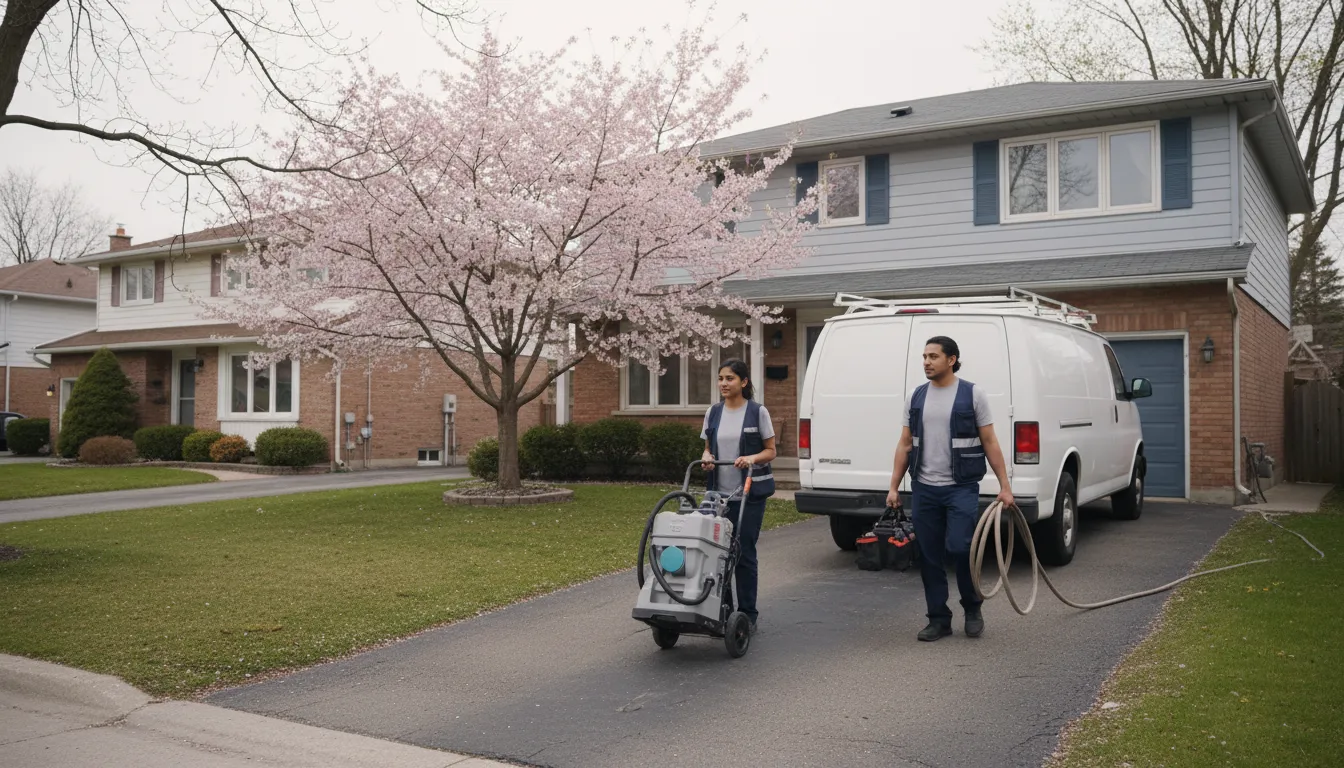
Summer humidity across the region slows natural evaporation considerably, while older homes with plaster walls, dense original lath, or limited insulation retain moisture differently than a new-build with modern materials. Basements — common living space across Markham and the GTA — are particularly prone to trapped moisture given their limited airflow and below-grade construction.
A drying plan built around the specific structure
We factor in the home's age, construction type, and the season itself when setting a drying plan, adjusting equipment and duration accordingly. The result is a structure that's actually dry throughout — framing, subfloor, and wall cavities included — not just dry on the surfaces you can see.
Our structural drying process
Measured at every stage, start to finish.
- 1
Baseline moisture readings
We measure affected materials before any equipment is set.
- 2
Equipment placement
Dehumidifiers and air movers are positioned according to the space and materials involved.
- 3
Ongoing monitoring
We track readings throughout the drying period and adjust as needed.
- 4
Confirmed dry-out
Drying concludes only once moisture levels confirm the structure is genuinely safe.
- 5
Final documentation
We provide a record of the drying process and final readings for your files.
Why our drying process holds up
The unglamorous stage deserves the same rigour as the visible ones.
Licensed & insured
Structural drying carried out under full licensing.
Timely equipment deployment
We set drying equipment promptly once extraction is complete.
Precision over guesswork
Every decision is guided by actual moisture readings.
Whole-structure attention
We check framing and subfloor, not just visible surfaces.
Efficient equipment use
Right-sized dehumidification, avoiding unnecessary energy use.
Genuine technical grounding
An informed approach to how GTA homes hold and release moisture.
Structural drying questions
How do you know when a structure is truly dry?
We rely on moisture meter readings taken across affected materials, comparing them to safe industry benchmarks rather than visual impression.
How long does structural drying typically take?
It varies with the extent of the water damage, materials involved, and ambient humidity — we monitor daily and adjust the plan accordingly.
Will drying equipment be noisy or disruptive?
Air movers and dehumidifiers do produce noise, though we position equipment thoughtfully to minimize disruption where we can.
Do older GTA homes dry differently than new builds?
Yes, plaster, dense lath, and limited insulation in older homes can retain moisture longer than materials used in newer construction.
How do I request a quote for structural drying?
Email us with the details of your situation and we'll respond with next steps.
Drying that's actually finished when we say it is
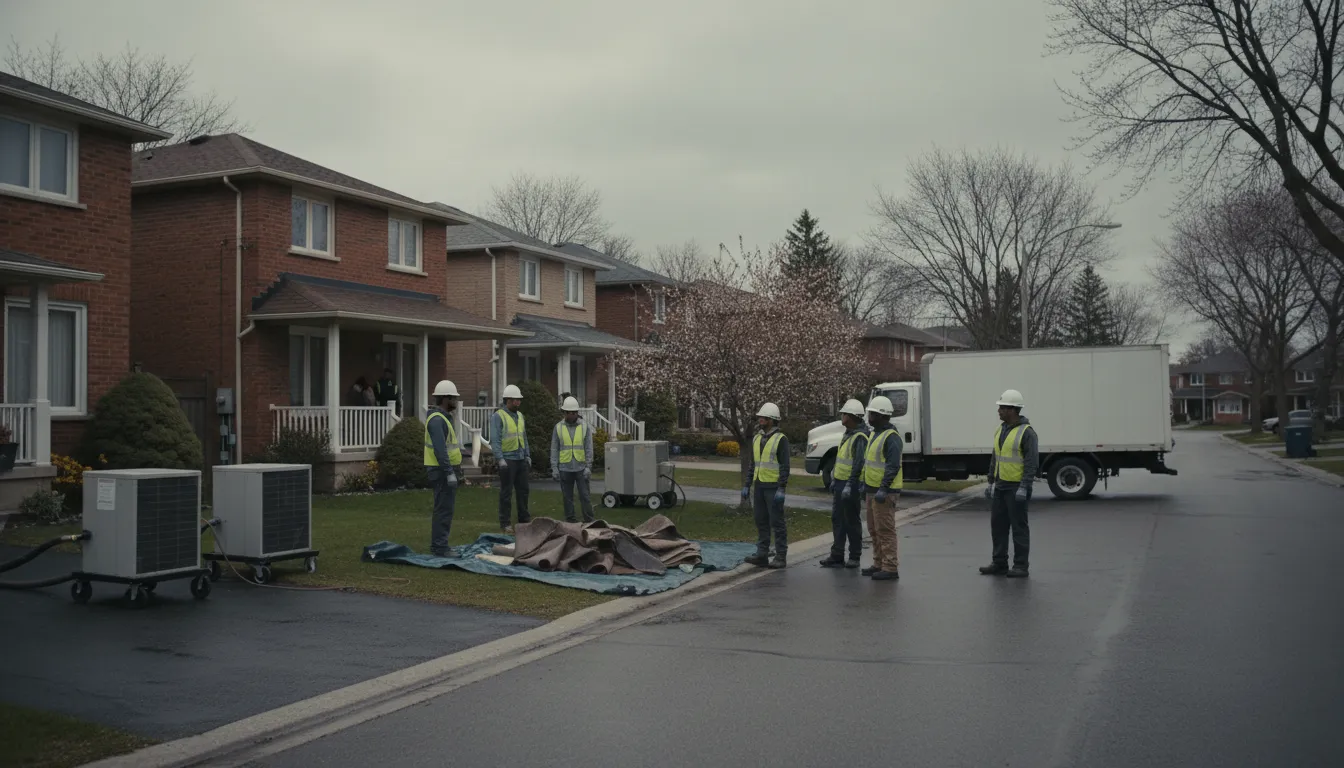
Email us to request a quote for structural drying and dehumidification across Markham and the GTA.
Email Us for a Free EstimateWeather drives water-damage risk — email us if you find water.
Fall water-damage conditions in Markham, ON
Fall rain around Markham, ON tests gutters, sump pumps, and foundations; catching leaks and seepage early prevents the slow water damage and mold that surface over winter.
Proudly Serving Markham, ON
Local, on-time service throughout Markham and the surrounding area.